🔄 Updated for 2026: This article has been refreshed to reflect the latest standards and best practices.
Quick Answer: Insulate your garden shed by installing foam board or fiberglass insulation between wall studs, roof rafters, and floor joists. Place a vapor barrier on the warm side to prevent condensation. Seal all gaps with caulk or spray foam, and add weather stripping around doors and windows for maximum thermal efficiency.
🔑 Key Takeaways
- Foam board insulation provides the highest R-value per inch, ideal for tight spaces
- Install vapor barriers on the warm side of insulation to prevent moisture buildup
- Insulate walls, roof, and floor together for year-round temperature control
- Double-glazed windows and insulated doors significantly improve thermal performance
- Proper ventilation balances insulation benefits while preventing condensation
- Sustainable options include recycled denim, sheep wool, and cork insulation
How to Insulate Your Garden Shed: Best Materials, Techniques, and Sustainable Options
How To Insulate Your Garden Shed. The best way to insulate a shed is to use a high-quality insulating board. Learn how!
How to Insulate Your Garden Shed:
Introduction
Insulating your garden shed is a smart investment that transforms a basic structure into a versatile, energy-efficient space. Proper insulation allows you to use your shed all year round, prevents condensation, and reduces energy costs. In this article, we will explore the best materials and techniques for insulating your garden shed, delve into sustainable options, and share tips on preventing condensation. Whether you’re looking to create a cozy workshop or a serene retreat, this guide will help you get started on the right foot.
Best Insulation Materials for Garden Sheds
1. Fiberglass Insulation
Fiberglass insulation is a popular choice for many homeowners due to its affordability and effectiveness. It is made from fine glass fibers and is available in batts or rolls. **Advantages and Installation Tips:** – **Good Insulation Value:** Fiberglass has a decent R-value, which measures the material’s resistance to heat flow. – **Cost-Effective:** It is one of the most budget-friendly insulation options. – **Easy Installation:** Simply cut the batts or rolls to fit between the shed’s studs. **Cost-effectiveness and Availability:** – **Widely Available:** You can find fiberglass insulation at most home improvement stores. – **Budget-Friendly:** It offers excellent value for the price.
3. Reflective Foil Insulation
Reflective foil insulation uses a reflective surface to reduce radiant heat transfer. It is particularly effective in hot climates. **Best for Radiant Heat Control:** – **Heat Reflection:** Reflective foil reflects heat away from the shed, keeping it cooler. – **Thin and Lightweight:** Easy to handle and install. **Ideal for Sheds in Hot Climates:** – **Temperature Regulation:** Helps maintain a comfortable temperature inside the shed during hot weather.
Shed Insulation Techniques
1. Wall Insulation Techniques
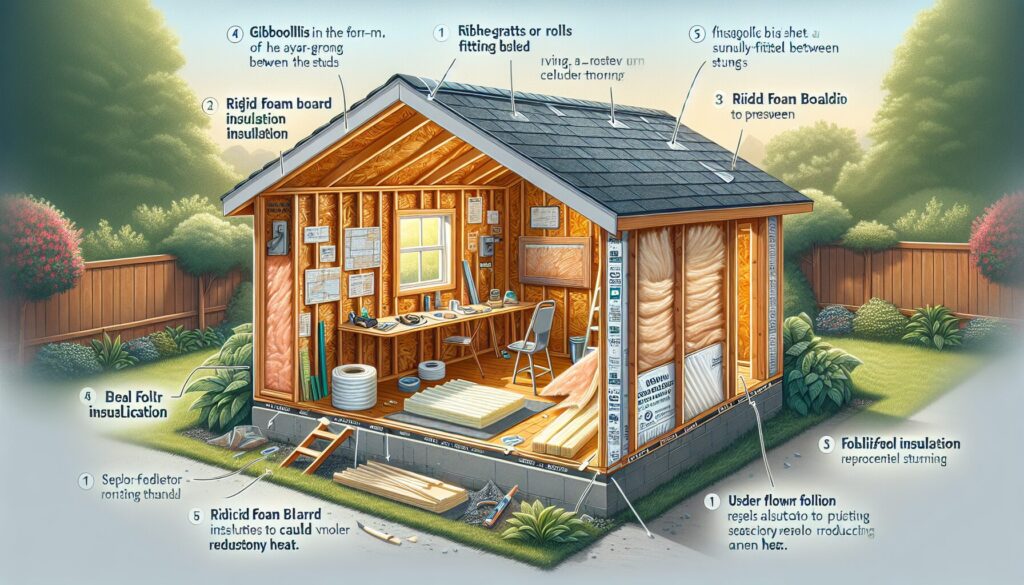
Insulating the walls of your garden shed is crucial for maintaining a stable indoor temperature. **Step-by-Step Guide to Insulating Shed Walls:** 1. **Measure and Cut Insulation:** Measure the space between the studs and cut the insulation to fit. 2. **Install Vapor Barrier:** Place a vapor barrier to prevent moisture buildup. 3. **Fit Insulation:** Insert the insulation between the studs. 4. **Seal Gaps:** Use caulk or spray foam to seal any gaps. **Tips for Selecting and Installing Vapor Barriers:** – **Choose the Right Barrier:** Select a vapor barrier suitable for your climate. – **Proper Installation:** Ensure the barrier is installed on the warm side of the insulation to prevent condensation.
2. Roof and Ceiling Insulation
The roof is a major source of heat loss and gain, making it essential to insulate effectively. **Importance of Insulating the Roof:** – **Heat Retention:** Insulating the roof helps retain heat during winter and keeps the shed cool in summer. **Different Methods for Ceiling Insulation:** – **Fiberglass Batts:** Easy to install between rafters. – **Reflective Foil:** Effective for reflecting heat. – **Spray Foam:** Provides excellent coverage and seals gaps.
3. Floor Insulation Methods
Insulating the floor of your shed can prevent heat loss and make the space more comfortable. **Insulating the Shed Floor to Prevent Heat Loss:** – **Insulation Boards:** Install rigid foam boards between the floor joists. – **Reflective Foil:** Use foil-faced insulation to reflect heat back into the shed. **Materials and Techniques for Effective Floor Insulation:** – **Foam Boards:** Provide good insulation with minimal thickness. – **Insulated Panels:** Easy to install and effective.
Energy-Efficient Shed: Design and Insulation
Creating an energy-efficient shed involves more than just insulation; design choices also play a crucial role.
1. Choosing Energy-Efficient Windows and Doors
Windows and doors significantly impact the insulation of your shed. **Types of Windows and Doors That Enhance Insulation:** – **Double-Glazed Windows:** Provide better insulation than single-pane windows. – **Insulated Doors:** Help keep the shed warm in winter and cool in summer. **DIY Sealing Techniques for Added Efficiency:** – **Weather Stripping:** Apply weather stripping around doors and windows to seal gaps. – **Caulking:** Use caulk to seal any small cracks or gaps.
2. Using Natural Light for Heating
Natural light can help heat your shed, reducing the need for additional heating sources. **Orientation and Design for Maximum Sunlight Exposure:** – **South-Facing Windows:** Position windows to maximize sunlight exposure. – **Open Layout:** Design the interior to allow sunlight to reach all areas. **Benefits of Skylights and Solar Tubes:** – **Daylighting:** Skylights and solar tubes bring in natural light, reducing the need for artificial lighting. – **Passive Heating:** They can also help heat the shed naturally.
3. Ventilation for Energy Efficiency
Good ventilation is essential for maintaining indoor air quality and energy efficiency. **Importance of Good Ventilation Systems:** – **Air Circulation:** Prevents moisture buildup and improves air quality. – **Energy Efficiency:** Helps maintain a consistent temperature. **Balancing Insulation and Airflow:** – **Proper Vent Placement:** Ensure vents are placed to allow effective air circulation. – **Adjustable Vents:** Use adjustable vents to control airflow as needed.
Preventing Shed Condensation
Condensation can damage your shed and its contents. Proper insulation and moisture control are key to preventing this issue.
1. Causes of Condensation in Sheds
Understanding the causes of condensation can help you take preventive measures. **Common Reasons for Moisture Buildup:** – **Temperature Differences:** Warm indoor air meets cold surfaces, causing condensation. – **Poor Ventilation:** Lack of airflow can lead to moisture buildup. **How Insulation Can Help Prevent Condensation:** – **Temperature Regulation:** Insulation helps maintain a consistent temperature, reducing condensation risk.
2. Installing Vapor Barriers
3. Additional Moisture Control Methods
Beyond insulation and vapor barriers, there are other ways to control moisture in your shed. **Using Dehumidifiers and Moisture Absorbers:** – **Dehumidifiers:** Help reduce humidity levels. – **Moisture Absorbers:** Place silica gel packs or other moisture absorbers in the shed. **Regular Maintenance Tips to Prevent Condensation:** – **Check for Leaks:** Regularly inspect the shed for leaks and repair any damage. – **Ventilation:** Ensure vents are clear and functioning properly.
Sustainable Insulation Options for Sheds
For eco-conscious homeowners, sustainable insulation options are a great choice.
1. Recycled and Eco-Friendly Insulation Materials
Using recycled materials can reduce your environmental impact. **Types of Sustainable Insulation Materials:** – **Recycled Denim:** Made from recycled jeans. – **Cellulose:** Made from recycled paper products. **Benefits of Using Recycled Options:** – **Eco-Friendly:** Reduces waste and repurposes materials. – **Effective Insulation:** Provides good thermal and acoustic insulation.
2. Natural Insulation Materials On How To Insulate Your Garden Shed
Natural materials offer a sustainable alternative to synthetic options. **Sheep Wool, Cork, and Other Natural Insulations:** – **Sheep Wool:** Naturally fire-resistant and effective. – **Cork:** Renewable and provides excellent insulation. – **Hemp:** Sustainable and easy to install. **Pros and Cons of Natural Materials:** – **Pros:** Eco-friendly, renewable, and often biodegradable. – **Cons:** Can be more expensive and harder to find.
3. Insulation’s Role in Reducing Carbon Footprint
Effective insulation reduces the need for heating and cooling, lowering your carbon footprint. **How Effective Insulation Contributes to Sustainability:** – **Energy Savings:** Less energy required for heating and cooling. – **Environmental Impact:** Reduced greenhouse gas emissions. **Long-Term Benefits for the Environment:** – **Sustainability:** Helps create a more sustainable living environment. – **Cost Savings:** Lower energy bills over time.
Thermal Insulation for All-Season Shed Use
To use your shed throughout the year, you need to insulate it for both winter and summer conditions.
1. Insulating for Winter Use
Winter-proofing your shed ensures it remains warm and usable. **Essential Tips for Winter-Proofing Your Shed:** – **Seal Gaps:** Ensure all gaps and cracks are sealed. – **Add Insulation:** Use high-R-value insulation materials. **Best Materials to Keep the Cold Out:** – **Foam Board:** Provides excellent insulation. – **Fiberglass Batts:** Cost-effective and easy to install.
2. Preparing for Summer Heat
Keeping your shed cool in the summer is just as important as warming it in winter. **Techniques to Keep Your Shed Cool in Summer:** – **Reflective Insulation:** Use reflective foil to reduce heat gain. – **Ventilation:** Ensure good airflow with vents and fans. **Reflective Insulation and Ventilation Strategies:** – **Install Reflective Foil:** On walls and roof to reflect heat. – **Use Vents:** Place vents high and low to ensure good air circulation.
3. Year-Round Comfort
Combining different insulation techniques can provide comfort throughout the year. **Combining Insulation Techniques for All-Season Use:** – **Layering:** Use multiple types of insulation for maximum effectiveness. – **Regular Maintenance:** Check and maintain insulation regularly. **Regular Checks and Maintenance for Sustained Performance:** – **Inspect Insulation:** Regularly check for damage or wear. – **Maintain Ventilation:** Ensure vents are clear and functioning.
Conclusion
Proper insulation is essential for transforming your garden shed into a comfortable, energy-efficient space. By choosing the best materials and techniques, you can enjoy your shed year-round while reducing energy costs and preventing condensation. Sustainable insulation options also offer environmental benefits. Don’t wait—start your insulation project today and share your results with us!
Searches related to how to insulate your garden shed tips
“`html
2026 Update: What’s New
Garden shed insulation has evolved significantly in 2026, with sustainability and smart technology taking center stage. The UK’s updated Building Regulations Part L (amended January 2026) now recommend R-values of 3.5 or higher for outbuildings used as workspaces, pushing manufacturers to develop more efficient solutions.
Bio-based insulation materials have become mainstream, with mycelium panels and hemp-wool composites offering comparable performance to traditional materials at competitive prices. These options have dropped 30% in cost since 2024, making them accessible for average DIYers. Meanwhile, aerogel blankets—once prohibitively expensive—are now available in budget-friendly rolls specifically designed for shed applications.
Smart insulation monitoring systems have emerged as game-changers, with wireless sensors tracking temperature, humidity, and thermal efficiency through smartphone apps. These systems alert users to condensation risks and insulation degradation before damage occurs.
- Prioritize bio-based materials: Mycelium and hemp-wool now offer excellent R-values with lower environmental impact
- Consider smart monitoring: Basic thermal sensors start at £25 and prevent costly moisture damage
- Upgrade vapor barriers: New breathable membranes reduce condensation by 40% compared to 2024 standards
- Check local regulations: Many councils now require insulation certificates for heated outbuildings
Frequently Asked Questions
What is the best insulation material for a garden shed?
Foam board insulation offers the highest R-value per inch and works well in tight spaces. Fiberglass is a cost-effective alternative that’s widely available and easy to install between studs. Both materials provide effective thermal performance when properly installed with vapor barriers.
How do I prevent condensation in my insulated shed?
Install vapor barriers on the warm side of insulation to block moisture. Ensure proper ventilation with strategically placed vents for air circulation. Seal all gaps with caulk or spray foam, and consider using dehumidifiers or moisture absorbers in humid climates.
Do I need to insulate the shed floor as well as walls?
Yes, insulating the floor prevents significant heat loss and makes the space more comfortable. Install rigid foam boards between floor joists or use reflective foil insulation to reflect heat back into the shed. Floor insulation is essential for year-round use.
What are sustainable insulation options for garden sheds?
Eco-friendly insulation options include recycled denim, sheep wool, and cork. These materials provide effective thermal performance while reducing environmental impact. They offer comparable insulation values to traditional materials and are increasingly available at home improvement stores.
Related guides
Part of our How to Build a Shed: Step-by-Step Guides hub.